What Role Does Monthly Re-Valuation Play Alongside the Weekly EOS Scorecard?
EOS-run companies love the Scorecard.
It’s simple. It’s measurable. It’s disciplined. Every week, your leadership team sits in the L10, reviews 5–15 numbers, and quickly sees whether the business is on track. That weekly rhythm builds traction.
But here’s the deeper question:
Are the numbers you’re tracking actually increasing your enterprise value?
Because operational health and exit-readiness are not the same thing.
The weekly EOS Scorecard tells you whether the business is running well.
Monthly re-valuation tells you whether the business is becoming more valuable.
If you’re serious about closing value gaps and preparing for optionality - sell, scale, or step back - you need both.
Let’s break down why.
The Weekly EOS Scorecard: Operational Clarity
If you’re running on EOS, your Scorecard is your early-warning system.
It tracks leading indicators:
Revenue
Gross margin
Sales pipeline
AR days
Production metrics
Hiring pipeline
Cash position
Customer satisfaction
It answers one question:
“Are we on track this week?”
It supports your 90-day world. It keeps issues visible. It drives accountability. It protects traction.
But here’s what it does not answer:
Is our business more transferable?
Are we reducing key-person risk?
Are we closing value gaps?
Are buyers gaining confidence?
Is our multiple improving?
That’s where monthly re-valuation enters the conversation.
Monthly Re-Valuation: Translating Performance Into Enterprise Value
In the SxSE Growth & Exit Consulting Program , monthly Dynamic Re-Valuation™ is a core deliverable. It’s not a one-time opinion of value. It’s an evolving measurement tied to your progress.
This is the critical distinction.
Most business owners get a valuation once:
When they’re thinking about selling
When a banker requires it
Or when they’re curious
Then they put it in a drawer.
But valuation is not static.
It moves based on:
Profitability
Risk profile
Leadership depth
Customer concentration
Systems documentation
Governance structure
Market positioning
Recurring revenue quality
The weekly Scorecard tracks activity.
Monthly re-valuation measures how that activity impacts value.
It answers:
“Is what we’re doing increasing the multiple—or just maintaining performance?”
Why EOS Alone Isn’t Enough
EOS builds an excellent operating company.
As outlined in Exit Ready , the SxSE system layers exit-readiness on top of EOS. It’s the superstructure built on your operational foundation.
EOS gives you:
Vision
People clarity
Scorecard discipline
Issue solving
Process documentation
Traction
SxSE asks a different question:
“Would a buyer pay a premium for this?”
You can hit all your Scorecard numbers and still:
Be overly dependent on the owner
Have undocumented key processes
Carry customer concentration risk
Lack succession depth
Have weak governance
Present messy financial reporting
Buyers discount risk.
Monthly re-valuation quantifies that discount.
The Real Role of Monthly Re-Valuation
Let’s break it into five practical functions.
1. It Turns Value Into a KPI
EOS companies love KPIs.
But most don’t track valuation as one.
When you measure valuation monthly:
It becomes visible.
It becomes discussed.
It becomes intentional.
It becomes part of Rocks.
It influences decision-making.
Now your leadership team sees:
“This initiative increased value by $1.2M.”
“This risk reduced our multiple by 0.4x.”
“Owner dependence is costing us $3M in enterprise value.”
That changes behavior.
2. It Connects Advisor Meeting Pulse to Execution
The Six1 model integrates your:
M&A advisor
CPA
Tax advisor
Wealth advisor
Estate planning attorney
Legal counsel
EOS operating system
When your advisors meet reactively, you get advice.
When they meet proactively around valuation data, you get strategy.
Monthly re-valuation fuels the Advisor Meeting Pulse:
CPA sees tax optimization opportunities.
M&A advisor flags buyer red flags.
Financial advisor models post-exit outcomes.
Estate planning identifies risk exposure.
Legal spots structural vulnerabilities.
Without valuation movement data, advisor meetings stay abstract.
With it, they become coordinated.
3. It Identifies Hidden Value Gaps Early
Let’s say your Scorecard shows:
Revenue up 12%
Gross margin steady
Cash strong
AR under control
Looks healthy.
But the re-valuation shows:
Multiple declining.
Transferability risk rising.
Customer concentration worsening.
Leadership bench not deep enough.
Now you’ve uncovered a hidden value gap.
The business is running well.
But it’s becoming less sellable.
That’s the difference between operational traction and exit-readiness.
4. It Drives Better 90-Day Rocks
If valuation is flat, you don’t just set growth Rocks.
You set value-enhancing Rocks:
Document the top 5 core processes.
Install a successor for a critical seat.
Diversify top 3 customers.
Upgrade reporting to buyer-grade financials.
Reduce owner approvals by 40%.
Now Rocks tie directly to value growth.
Your EOS discipline powers exit-readiness.
5. It Creates Emotional Optionality
One of the biggest insights from Exit Ready is this:
Exit readiness isn’t about selling tomorrow.
It’s about being ready if tomorrow happens.
When you track valuation monthly:
You know what your business is worth.
You know what increases it.
You know what decreases it.
You know what it would take to sell.
You know if you’re on pace.
That clarity reduces anxiety.
It strengthens confidence.
It creates leverage.
You move from hope to control.
Weekly vs Monthly: They Serve Different Purposes
Weekly EOS Scorecard
Tracks operational metrics
Focused on 90-day world
Identifies execution issues
Identifies risk & multiple gaps
Internal lens
Maintains traction
Monthly Re-Valuation
Tracks enterprise value
Focused on long-term exit
Identifies risk & multiple gaps
Buyer lens
Builds optionality
You need both.
One keeps the machine running.
The other increases the price someone would pay for it.
How to Integrate Them Practically
If you’re running EOS today, here’s the practical move:
Keep your weekly Scorecard disciplined.
Add a monthly valuation review rhythm.
Tie valuation insights into quarterly Rocks.
Bring valuation movement into Advisor Meetings.
Track transferability metrics intentionally.
Don’t replace EOS.
Layer SxSE onto it.
As outlined in the Step by Step Exit model , the goal is to build a business that is:
More valuable
Less dependent
Truly ready
Monthly re-valuation is the scoreboard for that transformation.
The Bottom Line
Your EOS Scorecard tells you if the business is healthy.
Monthly re-valuation tells you if the business is becoming more valuable.
Healthy businesses don’t always sell.
Transferable, de-risked, well-documented, professionally presented businesses do.
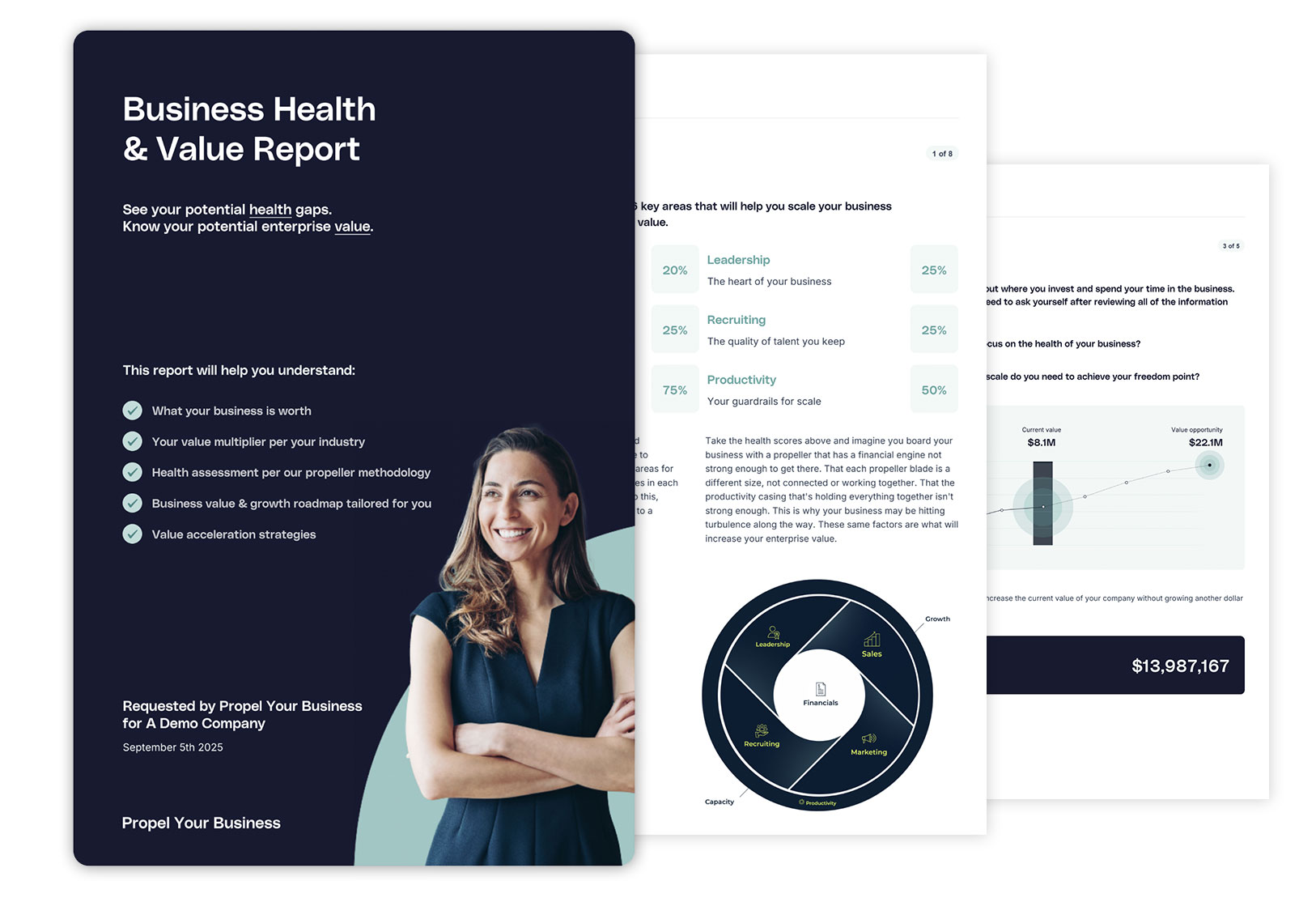
If you’re running on EOS and want to see how your business measures up, take the Health & Value Assessment to discover your exit readiness score.