Succession Before Separation
Strengthening Leadership Benches for Continuity

Succession planning isn’t about stepping aside—it’s about stepping ahead. For EOS-run companies, preparing for leadership continuity is a core part of becoming truly Exit-Ready. Too often, founders delay this work until they’re emotionally or operationally ready to sell. By then, it’s too late. Buyers, successors, and teams all sense the gap between a company’s strong operations and its fragile leadership bench.
The Step by Step Exit (SxSE) model challenges leaders to build succession capacity before they consider separation. It’s the difference between being replaceable and being transferable. The following insights, drawn from the SxSE program and Exit Ready methodology, explore four essential dimensions of succession planning: identifying next-generation leaders, spotting valuation-damaging blind spots, timing the process early enough to matter, and aligning your Six1 advisor team to guide the transition across every front.
1. Identifying and Preparing the Next Generation of Leaders
Strong leadership depth is one of the most critical drivers of enterprise value. EOS provides the framework—clear accountability charts, defined roles, measurable Rocks—but succession requires more than structure. It requires intent.
EOS-run companies should begin by mapping key seats through the lens of independence. Ask: which functions still depend on the founder’s decision-making or relationships? Every one of those seats is a red flag for buyers and a bottleneck for continuity. From there, identify potential successors within the organization who truly GWC their seats—those who Get it, Want it, and have the Capacity to grow into higher responsibility.
Building succession readiness is less about filling gaps overnight and more about developing capability over time. Pair future leaders with mentorship from the Integrator and advisors. Let them lead cross-functional Rocks, manage customer relationships, and make decisions that stretch their authority. Every quarter, increase the company’s ability to run without you. That’s not just leadership development—it’s valuation growth.
2. Avoiding the Blind Spots That Reduce Valuation
Many founder-led companies running on EOS still fall prey to invisible succession risks. The most common blind spot is emotional: owners confuse loyalty with leadership readiness. High tenure or technical expertise doesn’t automatically translate into strategic vision. Another blind spot is overconfidence in the strength of the current team—assuming EOS structure alone guarantees continuity.
In due diligence, buyers quickly expose these weaknesses. They assess whether the leadership team can drive growth and make decisions without the founder’s oversight. If they can’t, valuation drops. The owner becomes the risk.
To eliminate these blind spots, conduct an internal leadership audit annually. Review the Accountability Chart not just for role clarity but for bench strength. Identify one successor (or external candidate) for each critical seat. Then, use the EOS Scorecard to track measurable leadership development—decision accuracy, retention rates, and process adoption. Make succession a measurable part of the company’s operational rhythm.
3. The Right Time to Begin: Early Enough to Matter
In the Step by Step Exit process, succession planning typically begins three to five years before an owner’s anticipated transition. But “three to five years” isn’t a countdown—it’s a strategy window. It allows time for mentoring, authority transfer, and cultural alignment. Starting late turns succession into a scramble; starting early turns it into a system.
EOS already runs in the 90-Day World. That rhythm makes succession timing predictable. Each quarter offers an opportunity to assign exit-readiness Rocks: delegate owner-dependent roles, build documentation for critical processes, and coach successors through real accountability. Over time, the owner shifts from daily operator to strategic mentor. This transition, done deliberately, sends a clear signal to potential buyers: the business can thrive without you.
The best succession plans make the founder optional—not absent. Optionality equals leverage, both in valuation and in personal freedom.
4. Aligning the Six1 Advisor Team for a Seamless Transition
Succession readiness doesn’t happen in isolation—it’s orchestrated. That’s where the Six1 Advisor Model comes in. Each advisor plays a distinct role in ensuring leadership continuity aligns with the company’s legal, financial, and operational frameworks.
The Legal Advisor ensures employment agreements, stock transfer plans, and governance structures are ready for new leadership.
The CPA and Tax Advisor structure compensation, equity, and incentive plans that reward long-term performance without triggering tax inefficiencies.
The Financial and Wealth Advisors synchronize business liquidity with the owner’s personal readiness, helping both the founder and successors prepare for the financial realities of transition.
The M&A Advisor keeps the succession process aligned with market expectations, ensuring the team and systems will withstand buyer due diligence.
The EOS Implementer or Exit Coach keeps succession integrated into the company’s meeting pulse—turning leadership development into a measurable, quarterly discipline.
When these advisors operate within one unified system—the EOS structure—they eliminate silos and conflicting guidance. The result is a coordinated transition that protects value, reduces key-person risk, and maintains cultural integrity.
Conclusion: Succession Is Exit Readiness in Action
Succession isn’t a phase—it’s a pillar. It’s how EOS-run companies transform from owner-dependent to owner-optional. The companies that master succession before separation don’t just survive a transition; they command premium valuations and continuity of culture.
For founders, letting go doesn’t mean walking away. It means stepping back with clarity and confidence, knowing the business—and the people—will carry the mission forward.
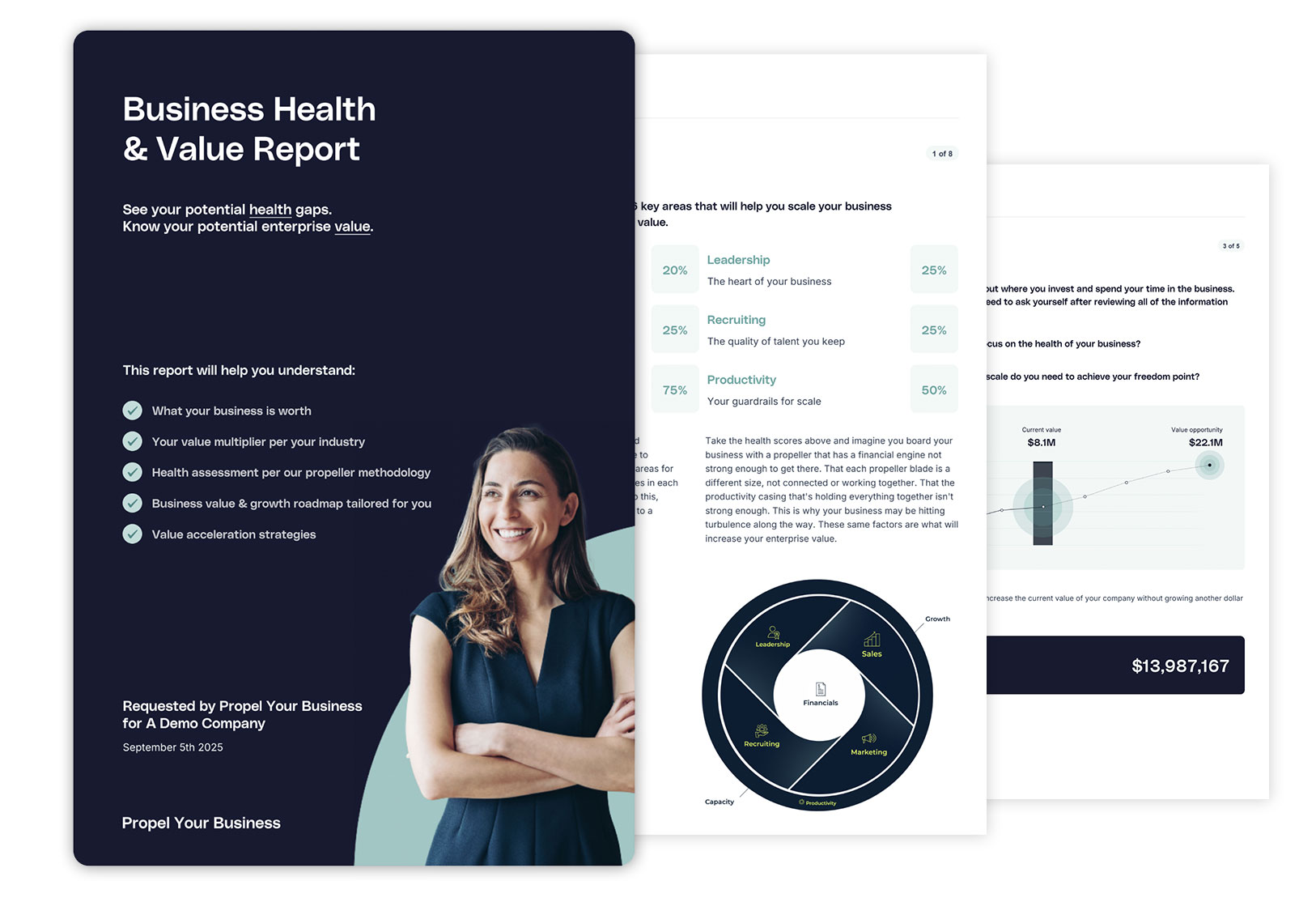
If you’re running on EOS and want to see how your business measures up, take the Value Gap Assessment to discover your exit readiness score.