How Reducing Owner Dependence Protects Your Business from the 5 Ds
Let's start with something most business owners don't love thinking about: every one of us will eventually exit our company. The only real question is whether that exit happens on your terms or someone else's.
If you're running on EOS, you've likely put serious work into growth, profitability, and operational excellence. That's worth celebrating. But there's a threat to business value that tends to hide in plain sight, even in well-run companies: owner dependence.
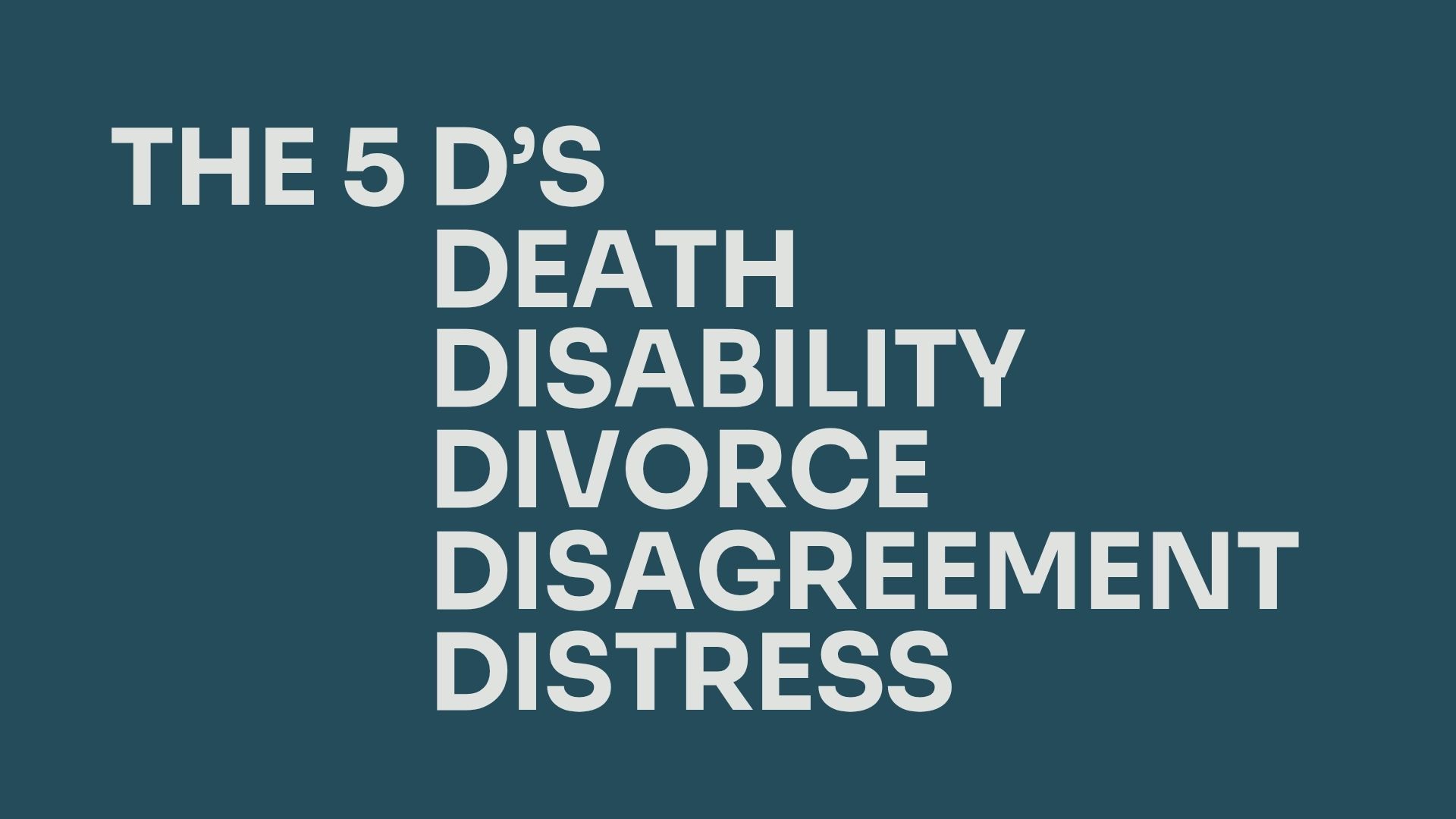
When a business leans too heavily on its owner for relationships, decisions, expertise, or day-to-day operations it carries risk. That risk is easy to miss during stable times. But it becomes painfully visible when one of the 5 Ds shows up: Death, Disability, Divorce, Disagreement, or Distress.
These aren't just hypothetical scenarios. They're the events that force unplanned exits and quietly erode business value when a company isn't prepared. The encouraging news is that reducing owner dependence is one of the most powerful things you can do to protect what you've built regardless of whether a sale is anywhere on your radar.
The Hidden Cost Most Owners Don't See
Think about how you built your business. Chances are it took grit, deep expertise, and a whole lot of personal involvement. You were the chief salesperson, the relationship manager, the strategic visionary, the problem solver, the decision maker sometimes all before lunch.
That drive is what created the business. But here's where it gets tricky: buyers, investors, and future successors see that same involvement as risk.
When too much of a company's success is tied to one person, the business becomes fragile in ways that aren't obvious until something goes wrong. Revenue, customer retention, employee confidence, and operational continuity can all be threatened when that person is suddenly unavailable.
The bottom line is simple: the less dependent your business is on you, the more resilient it becomes when life takes an unexpected turn.
The 5 Ds and Why Preparation Changes Everything
Death
This is the one nobody wants to talk about, but every business needs to plan for it. When an owner passes away unexpectedly, families are left making critical decisions under enormous emotional stress. If the owner was holding key customer relationships, controlling major decisions, or carrying undocumented operational knowledge in their head, business value can decline quickly and quietly.
Employees get uncertain. Customers start asking questions. Buyers see elevated risk and adjust their offers accordingly.
A business that has already transferred relationships, documented its processes, and developed leadership successors is in a fundamentally different position. It can protect its value even through the hardest transitions.
Disability
A medical event can remove an owner from the picture with almost no warning and the disruption can be temporary or permanent. If operations grind to a halt while everyone waits for the owner to return, the financial consequences can be serious.
Owner-independent businesses keep moving because responsibility is distributed, authority is delegated, and critical knowledge lives within the organization rather than inside one person. That operational resilience protects both revenue and valuation when it matters most.
Divorce
Divorce can create unexpected pressure on ownership structures in ways that catch people off guard. When the business represents a significant portion of marital assets, valuation questions come up fast and companies heavily dependent on the owner often face greater scrutiny because their value is so directly tied to that individual.
A business with documented systems, strong leadership, and transferable processes is simply easier to value and easier to transition. That matters enormously during ownership restructuring.
Disagreement
Partnership disputes can derail even the most successful companies. Whether the conflict involves business partners, shareholders, family members, or the leadership team, uncertainty spreads quickly.
When one person is the central decision maker and primary relationship holder, disagreements escalate into operational disruption faster than anyone expects. Building a company that runs through systems rather than personalities protects enterprise value when interpersonal dynamics get complicated. Strong governance, clear accountability, and distributed leadership create stability that personalities alone can't provide.
Distress
Economic downturns, market disruptions, unexpected legal challenges these can force owners into difficult corners. Distressed exits happen when options run out.
Businesses that are heavily owner-dependent struggle to attract buyers in distressed situations, because it's not clear the business can function without its founder. Companies that have invested in owner independence have more options: recapitalization, succession planning, strategic partnerships, acquisition interest. They can respond from a position of strength rather than desperation.
What Owner Independence Actually Looks Like
Here's something important to understand: reducing owner dependence doesn't mean you disappear from your business. It means your business gains the ability to perform without requiring your constant presence.
If you're running EOS, you're already building toward this you just might not be thinking of it that way. Your Accountability Chart clarifies who owns what outcomes. Documented core processes create consistency. Scorecards give visibility into performance. Quarterly Rocks drive execution. Your leadership team is developing the ability to solve issues independently through IDS.
The goal is simply to take that foundation further to build a company that stays strong regardless of whether you're in the building every day.
Four Practical Places to Start
Transfer critical relationships. If customers trust you personally, if vendors call your cell phone, if referral partners think of you rather than your company that's concentration risk. Start intentionally bringing leadership team members into those relationships. Transition them gradually and thoughtfully. When relationships belong to the company rather than the owner, business value becomes far more durable.
Document tribal knowledge. Every owner carries valuable knowledge that exists nowhere else pricing nuances, customer history, operational shortcuts, vendor relationships, hard-won industry insight. Systematically capturing that knowledge protects the business against sudden disruption and makes it dramatically easier to develop future leaders.
Build leadership depth. Strong companies aren't built around one person they're built around teams. Identify key leaders and give them real decision-making responsibility. Develop successors for critical roles. Create redundancy in leadership functions. Buyers pay premiums for companies with strong management teams precisely because leadership continuity reduces risk.
Delegate decision-making. Many owners create bottlenecks without realizing it. When every important call flows through one person, growth slows and vulnerability grows. Creating clear decision frameworks and empowering your leaders to act within defined boundaries makes your organization more agile and less exposed.
This Matters Even If You Never Plan to Sell
Here's a mindset shift worth making: exit readiness isn't just for owners who are planning a transaction. The benefits of reducing owner dependence start showing up immediately, long before any sale conversation ever happens.
You'll see improved scalability. A stronger, more confident leadership team. More personal freedom. Less stress. And a business that's genuinely more valuable not just on paper, but in the way it operates every day.
Most importantly, you'll have protected the company against the unexpected. And the best time to do that is always before you need to.
The earlier you start building independence into your business, the more options you create for yourself, for your family, for your employees, and for your future.
What You've Built Deserves to Be Protected
The financial impact of the 5 Ds is almost always magnified when a business is too dependent on its owner. Death, disability, divorce, disagreement, and distress don't announce themselves in advance but they do expose whatever weaknesses have been left unaddressed.
EOS gives you an exceptional operational foundation. Reducing owner dependence builds on that foundation to create something that's genuinely transferable, resilient, and ready for whatever comes next.
When your business doesn't need you every minute, its value becomes more secure. Your team gains confidence. Your stakeholders gain stability. And you gain something that every business owner deserves: real freedom.
That's worth building toward one quarter at a time.
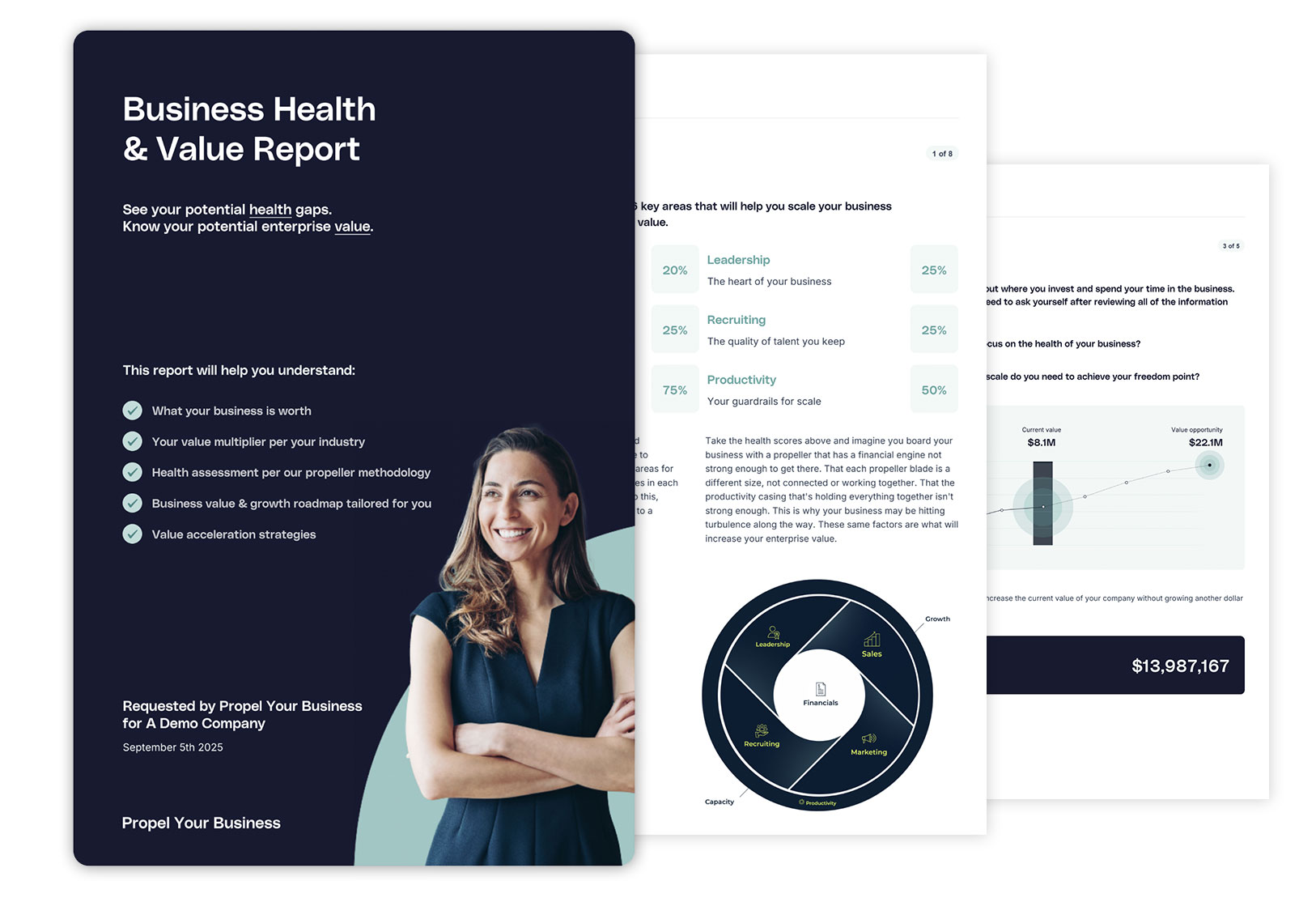
Curious where your business stands today? Take the Health & Value Assessment to discover your exit readiness score and see exactly where your biggest opportunities are.