How can EOS companies align Rocks with succession planning and leadership development?

If you're running on EOS, you already understand the power of Rocks. Every 90 days, your leadership team gets clear on what matters most, assigns ownership, and executes with discipline. It's one of the best mechanisms out there for creating focus and accountability.
But here's a question worth sitting with: Are your Rocks building a better business today, or a more valuable business tomorrow?
Those aren't the same thing.
Most leadership teams default to operational Rocks, and for good reason. Improving efficiency, completing key projects, and moving initiatives forward all matter. The problem is that if your Rocks aren't also strengthening leadership depth, reducing owner dependence, and improving transferability, you're leaving real value on the table.
At Step by Step Exit, we remind EOS leaders of something that often surprises them: valuation isn't created during a sale process. It's created years before a buyer ever enters the conversation.
The Hidden Connection Between Rocks and Enterprise Value
When a buyer evaluates your business, they're not just purchasing historical performance. They're buying confidence in the future: confidence that the company keeps growing after you leave, that key knowledge is documented, that leadership can make decisions without you in the room, and that customer relationships and culture survive the transition.
This is why owner dependence consistently lowers valuation. A business that revolves around one person carries more risk than a business that can thrive independently. And that independence doesn't happen by accident. It's built through dozens of intentional decisions made over years.
Quarterly Rocks are one of the most effective tools for making those decisions stick.
Why Succession Planning Usually Fails
Most companies treat succession planning as an event. Something that becomes important when retirement is approaching or when a sale is on the horizon. By the time it feels urgent, though, there's rarely enough time to develop leaders, transfer knowledge, and build the organizational confidence that buyers are looking for.
Real succession planning isn't an event. It's a long series of small, intentional leadership decisions made quarter by quarter.
EOS already gives you the perfect structure for this through the 90-Day World. Rather than treating succession as a separate initiative, the most exit-ready companies weave leadership development directly into their quarterly planning. When it becomes part of the Rock-setting process, leadership depth grows naturally alongside business performance, without adding complexity.
The Evolution of Exit-Ready Rocks
Most EOS companies start with operational Rocks, and that's appropriate:
Implement a new CRM
Improve gross margin
Launch a marketing campaign
Reduce production errors
Strengthen hiring processes
These matter. But mature EOS organizations eventually start layering a different kind of Rock into the mix, ones that build transferability alongside operational performance:
Create documented decision frameworks for department leaders
Develop a successor for a key leadership seat
Transfer key customer relationships to additional team members
Cross-train operational leaders
Document critical tribal knowledge
Build pathways for future leadership ownership
That's where long-term valuation growth begins.
Five Categories of Leadership Development Rocks
1. Leadership Capability Rocks
Buyers want evidence that your leadership team can execute without you. Rocks in this category might include completing a leadership training curriculum, developing a strategic planning process for department heads, or establishing quarterly leadership development sessions. The goal is building a bench that doesn't need the founder to call the plays.
2. Succession Rocks
Every critical seat in your business should eventually have a succession strategy. That means identifying successor candidates, creating individual development plans, establishing mentoring relationships, and defining what "ready" actually looks like for each role. Buyers consistently reward businesses where the org chart can survive a leadership transition.
3. Knowledge Transfer Rocks
Tribal knowledge is one of the largest hidden risks in founder-led companies. Years of operational expertise living inside one person's head is a liability, and buyers see it that way too. Rocks that document customer relationships, build process playbooks, and capture decision-making frameworks turn individual knowledge into organizational assets.
4. Delegation Rocks
Many owners are the bottleneck in their business without fully realizing it. Rocks that transfer pricing authority, delegate strategic customer reviews, and assign operational approvals to department leaders help move the owner from operator to investor. That shift dramatically improves how buyers see the business.
5. Culture and Continuity Rocks
Strong cultures outlive their founders, but only when they're intentionally built. Rocks that document values through behavioral standards, strengthen onboarding, and develop leadership communication frameworks help preserve what makes your company worth buying in the first place.
Turning Quarterly Planning Into Valuation Planning
Most leadership teams enter quarterly planning asking: "What are the biggest priorities for the next 90 days?"
Exit-ready leadership teams ask one additional question: "What priorities will make this business more valuable five years from now?"
That shift changes everything about how Rocks get chosen.
A practical way to evaluate any proposed Rock is to run it through three questions:
Does it improve operational performance?
Does it reduce dependency on a specific individual?
Does it strengthen future leadership capacity?
The strongest Rocks accomplish all three. "Develop Operations Manager Successor Program" isn't just a leadership initiative; it's a valuation initiative. "Document Top 20 Customer Relationship Framework" isn't just about continuity; it directly protects revenue during a transition and increases buyer confidence.
What Buyers Actually See
Picture two EOS companies with similar revenue, profit, and growth rates. One depends heavily on the founder. The other has documented systems, developed successors, empowered its leadership team, and distributed customer relationships across the organization.
Which one gets stronger offers? Which one moves through due diligence faster? Which one attracts more qualified buyers?
Buyers pay premiums for certainty. Leadership depth creates it. Succession readiness creates it. Transferability creates it. And every quarter is an opportunity to build more of it.
A Final Thought
EOS has already given you the structure to build a great business. The next challenge is building one that can thrive without you.
When Rocks are intentionally aligned with succession planning and leadership development, they stop being just quarterly priorities. They become compounding investments in stronger leadership, reduced key person risk, greater transferability, and ultimately, higher enterprise value.
The best exits aren't built in the year before a transaction. They're built quarter by quarter, Rock by Rock, long before the market ever arrives.
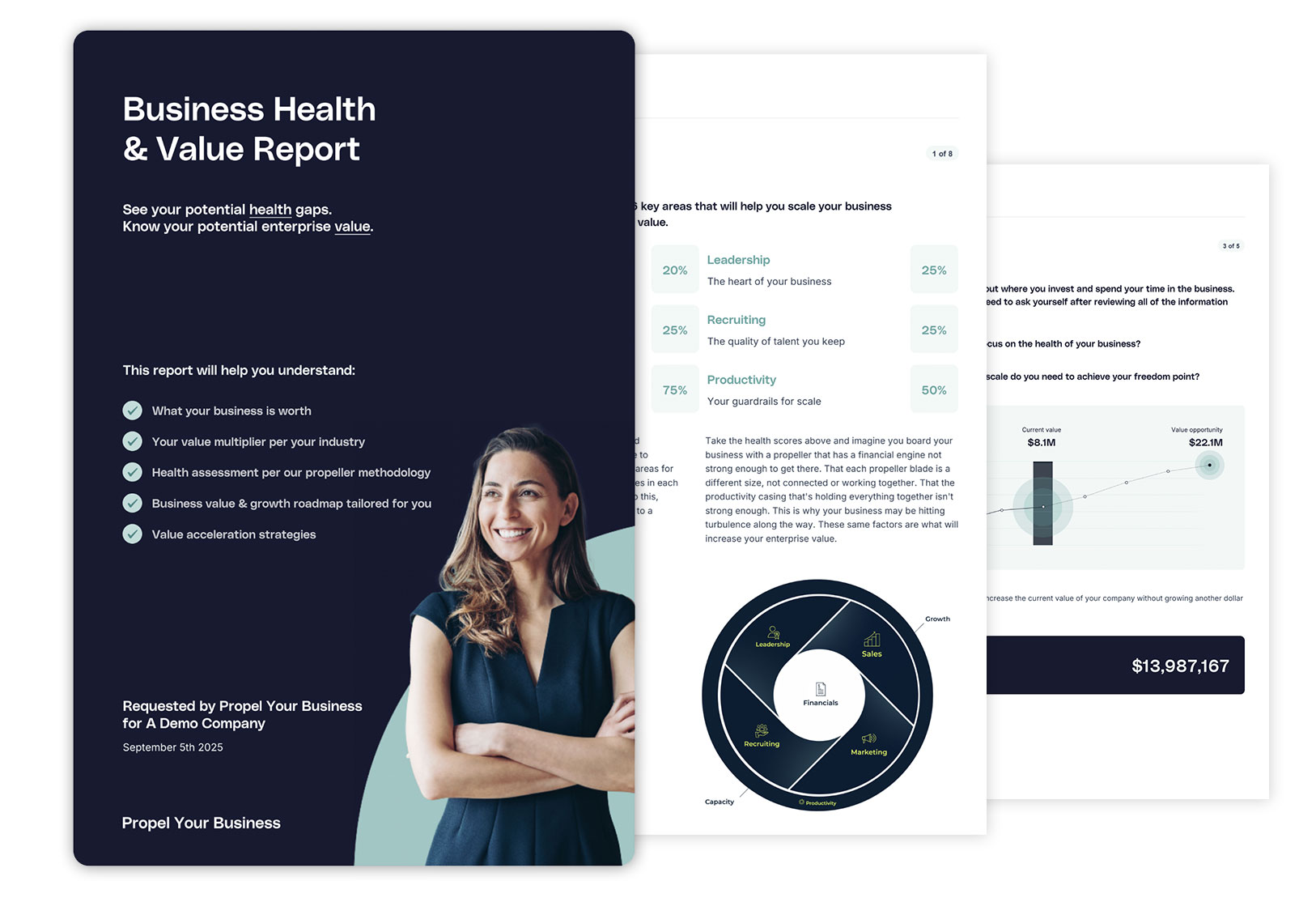
If you're running on EOS and want to see where you stand, take the Health & Value Assessment to discover your exit readiness score.