Exit Readiness Starts Long Before the Letter of Intent
How a Strong Advisor Cadence Improves Valuation and Reduces Deal Risk
EOS companies are built to run with discipline. They operate in the 90-day world. They use scorecards. They solve issues. They create accountability. Yet even highly functional EOS-run businesses often make one critical mistake when it comes to exit readiness: They wait too long to involve the right advisors.
Many owners assume advisors become important only when a sale is imminent. They believe the process starts once an investment banker is hired or a Letter of Intent lands on the table. That is often the most dangerous moment to begin preparing.
The businesses that command premium valuations and move through due diligence smoothly are almost never built in the final twelve months before a transaction. They are built through years of intentional preparation, alignment, and proactive decision-making. That preparation starts with advisor cadence.
At Step by Step Exit, we often say the right team plus the right process equals the right exit. EOS already provides the operating rhythm for execution. Exit readiness requires adding a coordinated advisory rhythm that continuously strengthens the business long before a buyer appears.
A strong advisor cadence does more than help you prepare for a transaction. It reduces risk, increases transferability, strengthens leadership accountability, and positions the business to operate independently of the founder. Most importantly, it creates optionality. Because exit readiness is not about selling tomorrow. It is about building a business that could sell tomorrow if you chose to.
The Problem With Reactive Exit Planning
Most business owners are incredibly busy building and growing their companies. Revenue goals, operational challenges, hiring, customer retention, and EOS execution consume most of their focus. Exit planning becomes something pushed into the future.
Unfortunately, buyers do not care how hard you worked to build the business. They care about what they are inheriting. When owners wait until a transaction is already underway to assemble advisors, several problems usually emerge. Financial reporting is incomplete or inconsistent. Legal agreements are outdated. Key customer relationships still revolve around the founder. Succession plans are unclear. Tax strategies were never optimized. Processes exist inside people’s heads instead of documented systems. Leadership accountability is weak outside the owner.
These issues create friction during due diligence. Friction creates uncertainty. Uncertainty lowers valuation and increases buyer leverage. The Exit Ready framework explains that many businesses fail during exit because they remain overly dependent on the owner and have not systematically prepared for transferability. A reactive approach forces owners into defensive mode. Instead of confidently leading a transaction, they spend months scrambling to fix preventable issues under pressure. That pressure is expensive.
Advisor Cadence Creates Strategic Visibility
One of the biggest misconceptions about advisors is that they only solve problems. The best advisors do something much more valuable. They create visibility before problems emerge.
A strong advisor cadence means your advisors are not meeting only during emergencies or transactions. They are integrated into a consistent operational rhythm that aligns with your EOS cadence.
At Step by Step Exit, this is reflected in the Six1 Model, where legal, tax, wealth, valuation, M&A, and financial advisors operate in sync with EOS execution. When advisors consistently engage with leadership, they identify value gaps early enough to correct them strategically instead of reactively. That changes everything.
For example: A CPA may identify margin reporting issues that could negatively impact EBITDA multiples later. An M&A advisor may recognize customer concentration concerns before they become a buyer objection. An estate planning attorney may uncover ownership structure risks that complicate a future transaction. A valuation expert may identify operational inefficiencies limiting enterprise value. A financial advisor may help the owner define personal post-exit goals that influence transaction strategy.
Without cadence, these conversations happen too late. With cadence, the business evolves continuously toward greater value and lower risk.
Buyers Pay More for Predictability
Every buyer is asking one core question during due diligence: Can this business continue succeeding without the current owner? That question influences valuation more than most founders realize.
Predictability creates confidence. Confidence creates competition. Competition increases valuation. Advisor cadence helps businesses become more predictable in several ways.
Financial Predictability
Consistent advisor involvement improves financial discipline long before diligence begins. Clean financial statements, accurate forecasting, normalized EBITDA adjustments, tax readiness, and transparent reporting all reduce buyer skepticism.
The SxSE program emphasizes monthly dynamic revaluation and ongoing financial coaching specifically because valuation is not static. It improves when businesses continuously strengthen their financial visibility and operational discipline. Buyers pay premiums for companies that provide clear, defensible numbers.
Operational Predictability
Strong advisory rhythms force companies to document systems, improve governance, and reduce operational chaos. When leadership teams consistently review risks, succession planning, and accountability structures, businesses become less dependent on heroic founder behavior. That operational maturity dramatically reduces perceived acquisition risk.
Leadership Predictability
A business with one decision-maker is fragile. A business with a capable leadership team executing within EOS is scalable. Advisor cadence strengthens leadership alignment because advisors continuously reinforce strategic thinking, accountability, and transition planning. Instead of building around the founder, the business develops institutional strength. That is what buyers want.
Due Diligence Is a Mirror
Many owners think due diligence is simply a buyer reviewing documents. Due diligence is a stress test of the entire business. It reveals whether systems are transferable. It reveals whether leadership is aligned. It reveals whether financials are trustworthy. It reveals whether operational discipline exists beneath the surface.
When companies lack advisor cadence, due diligence often exposes years of deferred decisions. This is why many deals either retrade or collapse entirely during diligence. According to Step by Step Exit, only 20% of businesses that go to market sell successfully because most owners wait too long to prepare.
Strong advisor cadence changes the experience completely. Instead of reacting to buyer requests, prepared companies already have: Documented processes, Updated contracts, Governance structures, Leadership succession plans, financial reporting packages, risk mitigation strategies, operational scorecards, tax planning frameworks, and strategic growth documentation. This dramatically shortens transaction timelines and reduces buyer anxiety. Deals move faster when confidence is high.
Advisor Cadence Builds Legacy, Not Just Enterprise Value
Most owners initially think about exit readiness financially. But eventually every founder confronts a deeper question: What happens to this business when I am no longer leading it? That is a legacy question. Legacy is not just about wealth creation. It is about continuity.
A business that collapses after acquisition or leadership transition is not truly exit-ready, regardless of sale price. Strong advisor cadence protects legacy because it forces owners to think beyond themselves.
It encourages conversations about: Leadership development, Succession planning, Cultural continuity, Governance, Family dynamics, Employee retention, Customer trust, and Long-term sustainability.
The Exit Ready framework repeatedly emphasizes that exit readiness is not a one-time event. It is the process of building a stronger, more transferable company every day. The owners who build enduring legacies are the ones who operationalize readiness years before they need it.
EOS Gives You the Rhythm. Advisors Expand the Vision.
One of the reasons SxSE focuses exclusively on EOS-run companies is because EOS already creates the discipline necessary for execution. Quarterly rocks, L10 meetings, scorecards, accountability charts, issue solving: All these systems create operational traction. Advisor cadence extends that traction into long-term enterprise value creation. The strongest EOS companies eventually evolve from asking: “How do we grow?” to asking: “How do we grow in a way that increases transferability, valuation, and optionality?”
That shift changes leadership conversations. Now succession becomes strategic. Documentation becomes valuable. Governance becomes essential. Risk management becomes proactive. Leadership development becomes urgent. Exit readiness stops being a someday conversation and becomes part of the operating system itself.
The Businesses That Win Prepare Early
The best exits rarely look dramatic from the outside. They look organized, prepared, calm, and predictable. That happens because preparation started years earlier.
Strong advisor cadence creates consistent alignment between operations, valuation, legal structure, leadership development, tax strategy, and long-term vision. It transforms advisors from isolated vendors into an integrated strategic team and that integration compounds over time. The result is not just a smoother transaction.
The result is a business with higher enterprise value, lower operational risk, greater leadership depth, improved transferability, stronger governance, more owner freedom, better negotiating leverage, greater confidence during diligence and most importantly, it gives the owner choices.
True exit readiness means you are no longer trapped by your business. You have the freedom to sell, scale, step back, recapitalize, or continue building on your terms. That is the real goal.
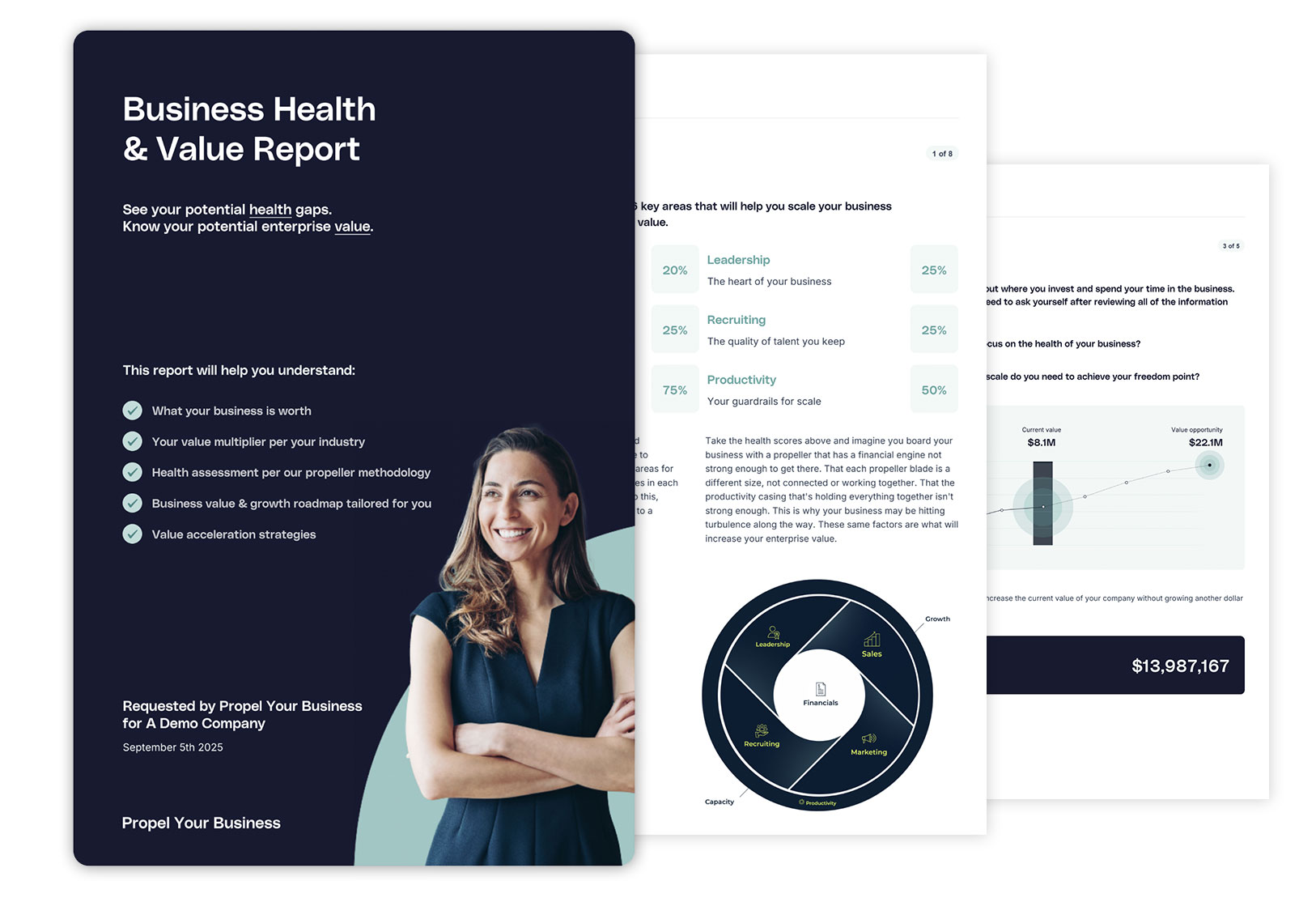
If you’re running on EOS and want to see how your business measures up, take the Health & Value Assessment to discover your exit readiness score.